Showing posts with label Books. Show all posts

Crossroads (Urban Shots) - A Review

on Monday, March 5, 2012

Now this is quality stuff. Genuinely. I do not know how many times did I find myself touched and connected and affected by the short stories compiled in this yet another brilliant anthology under the Urban Shots series. I do know, however, that this is one book I will strongly recommend to all book lovers out there, for the 30 stories told by 26 odd authors in this book are fresh, and textured interestingly. And as I stated earlier, this book is a quality affair. A pleasant, yet intense journey.

A glimpse through the foreword written by Rohini Kejriwal reveals to you what this book potentially would be about. As professed in the prologue, this book turns out to be a collection of tales on some very interesting and diverse characters, and mostly pivoted around a centrally important or watershed incident in their life. The simply yet elegantly told stories go beyond just that one incident and often make you stop and think. Each story here is a world of its own. Each character revels in a distinctness of his own.

What is truly commendable here is the selection of stories, due credit for which goes to the Editor Ahmed Faiyaz. This is perhaps the fifth book associated with him which I am reading, and I can now safely proclaim- he is one author who simply does not know how to disappoint his readers. Through this compendium, interestingly titled "Crossroads", Ahmed strings together some intense stories, each uniquely drawing you into the lull of its narrative. These are stories which find their roots in the urbane locales of India; each inspired by a different facet, human or physical, of the carelessly burgeoning and increasingly complicated urban existence of new age Indians. Some characters here pace too far ahead, much too quickly; yet others tell their tales about coming to terms with the world whizzing past them. There are stories here of complicated love, compromised relationships, pulverized identities, pressurized psyches, crushed innocence, thankless altruism, and unrewarded commitments. So many thoughts and emotions have been depicted in these 30 urban stories with such finesse that a constant eagerness to move onto and investigate the contents of the next story keeps you gripped throughout. An added beauty to all these tales is the fact that most, if not all of them are not easily predictable stories even though they build on situations one hears of or faces in real life.

Having been thoroughly satisfied by this outstanding collection, I was reflecting happily on a lot of them to pick my quintet. I have to admit, that selecting only five from a potential 30, each one of which stood as a strong contender to be included in my favorite five, was a task ridden with fond anxiety. After much thought, here are the five stories I found best..

1. Mindgames by Manisha Dhingra
A tale about psychological setbacks, one which turns ripe only at the very end. This was my absolute favorite from the lot.
2. Gautam Gargoyle by Shailaditya Chakraborty
Brilliantly written, beautiful wordplay and extremely intriguing plot. A complex take on what you might be tempted to dismiss as a rather mundane phenomenon. Understandably, this one was the Editor's pick.
3. Songs Of The Summer Bird by Anita Satyajit
I loved this story for its simplicity and  poignant portrayal of a misunderstood but well meaning library watchman. Simple sometimes is richly beautiful.
4. Jump, Didi by Sharath Komarraju
Dark, complex, intense. This story reveals itself to you in layers;. each new layer a whole new dimension. This story is about the innocent baby sitter next door and her forbidden sercrets.
5. Footsteps In The Dark by Mini Menon
A girl, penury, needs and exploitation. A sensitively told story of an aspect of our corporate society we need to feel ashamed off.

Also, Crossroads by Ahmed Faiyaz, the story which lends its title to the book is easily one of the best you will come across. Depicting love, lust, desires and commitments in a seamless manner, this story essentially themes around the concept of infidelity in urban relationships.

As a last thought, this book is one of those which makes me believe that contemporary Indian fiction has come of age. That said, there still are a lot more avenues to explore and experiment with. Crossroads is one book which has something to connect with everyone of you. 3.5 stars on 5 is what I will award it with.

And yes, the cover is totally gorgeous too. Quite prophetic of the gorgeous content waiting to be unveiled.


The Love Collection (Urban Shots) - A Review

on Wednesday, February 29, 2012

Love is sacred, yet to many lost and caught in this web of society, it remains forbidden. Love is universal, yet to most who devote all their senses to its pursuit, it remains elusive. Love is ethereal, yet it is defeated more often than not by considerations real and pragmatic. Love is love, yet in this one word lies a myriad of emotions ranging from happiness to anger to jealousy to possessiveness to sorrow to calmness. Love, as we see and feel it around ourselves today is simple and complex at the same time. The variegated hues of this simple-and-complex phenomenon and its diverse manifestations- some lovely, others ugly- is what is explored in another brilliant anthology published as a continuation of the Urban Shots series. This offering of short stories is aptly named- The Love Collection.

The above paragraph surmises with flair the moods, thoughts and emotions I underwent while reading the stories picked up by editor Sneh Thakur to be published in this compendium. Compiling 31 stories by as much as 27 different authors must have been a daunting task for Thakur (who quite adorably refers to herself as 'pint size Rapunzel'- a description I cannot quite get over), given that 'love' is an emotion all of us like to talk/write about. It serves perhaps as the first motivation for nascent writers to put pen to paper. Not guided by a uniformity of writing style, guided solely by a common emotion running through the 30 odd stories- the book could have faltered on many aspects- the most important being monotony or stereotyping. Love is not always dreamy. It is not always like a bollywood movie. And much as we would like to argue, in real life, it is not always depressive and unyielding. This book does well to explore the many shades, including the greys, of love and compile them in neatly. Each story stands out on its own. I could not compare or hold any two similar in the essence they portrayed. For this, the editor and the various authors deserve a proud pat on the their back.

Having stated in clear terms that I loved this book, two or three stories left me sorely disappointed. May be because they did not appeal to the dreamy lover in me, may be because I hate to associate depressiveness (almost clinical) with love. Very rarely does it happen that I leave a whole book unfinished; much too rare is the case with short stories. In this book, while there were stories which I devoted time to rereading, there were some I did not feel like finishing. That said, I would still strongly recommend this book to readers of contemporary Indian fiction. The stories contained in this book are stories about characters whom we meet in real life, characters we identify with, characters we hope we would meet someday and characters we thought existed only in stories. Exploring diverse backgrounds, wading through different emotional topographies, these stories are perfect to discover and understand and even amuse oneself with varying facets of love. While in some stories this emotion dominates, in others its subtle; in yet others it chooses to lurk around the periphery.

Importantly, reading for quite sometime titles under the Urban Shots series, I have come to realize that short stories are the perfect, breezy metro reads that can fit into demanding schedules of the day. You can leave anywhere, pick up anywhere, and still not feel lost. If the book lover inside you feels suppressed unwantonly because of compulsions of material world, The Love Collection might be a good place to start at. 3 stars on 5 it is for me. My quintet from this collection-

1. Making Out by Hina Siddiqui
The Editor's pick, and appropriately so. The title explains much, and hides much for what this story might be about.
2.Strangers by Ahmed Faiyaz
Begins normally, ends eerily. One of Ahmed's best short stories I have read.
3. Twisted by Lipi Mehta
You thought it was simple, but actually it was not. Exploring a different side of love.
4. The Jhalmuri Seller by Bhabhani Shankar Kar
The simplicity touched me. Simple, but beautiful and a little more than just a tale of nascent love.
5. Reality Bytes by Anitha Murthy
Will touch you, I guarantee. This was one of those I reread.

and I would also mention one which does not leave my mind, for it was one of the only which pandered beautifully to the romantic within me- A Girl Can Dream by Ayesha Khanna.

Once again, a very satisfying read. 

(Reviewed on request from Grey Oak-Westland)

Freedom At Midnight by Dominique Lapierre and Larry Collins

on Thursday, February 23, 2012

Here, I am attempting to review a classic historical treatise, which has won acclaim for itself from diverse corners of the world. I feel inadequate. To exacerbate my feeling of inadequacy, the fact that it has been more than a month since I finished this 700 page long book looms large over my head. Still, I have now been infected by this incurable urge of expressing my view about any and every book I read, here, on Nascent Emissions. So this post, essentially, is my 'view', not a 'review' of Freedom At Midnight.

History is not a hailed discipline in our education system. It is pursued by those whom science rejects and commerce repels. Even still, those who brag about their knowledge of historical occurrences do so on the basis of extensive reading of world history- the wars, the revolutions, the socio-economic evolution. I'm not saying there is anything wrong with it, but how many of us are actually aware of the history of India, and I here mean that part of Indian history which has perhaps been pivotal in shaping the landscape of India as we know it today? All of us have a decent idea about the Indian National Movement, the struggle for freedom, the Gandhis, the Nehrus, the Patels, the Partition; but are we really aware of what was it that went into making India one of the world's most successful secular democracies?

Lapierre and Collins, through their characteristic exhaustive research, attempt to answer the above question, and a lot many more. Their research was conducted precisely to recreate the drama and the hysteria surrounding just one event, perhaps the most important in the history of Modern India- that of Independence, concomitant to which was the Partition. The idea that I would be reading about 700 pages delineating just one event, however mammoth its significance, was both, intriguing and putting off. I am glad that intrigue prevailed. This book is not a mere collection of words, or recollection of incidents. This book is a magnum opus. And had it not contained its own set of controversial detailing, it might as well have been an indispensable reading for all students of history in India. For me, it still serves much as an authoritative text. When you go through page after page of tireless details, a certain amount of credibility and an acceptance of the veracity of facts builds up inside you along with respect for the authors for their painful investigation of even the minutest of events surrounding India's independence.

For those not used to Lapierre and Collins' writings- and they do have to their credit other historical works of unquestionable repute, viz, Paris Is Burning and O Jerusalem- the opening chapters of the book can baffle the reader with both, their verbosity and a little over-the-top detailing. However, that is how the authors set the scene. When you revisit events from Indian history via the narration of these authors, you will be certain to feel a thrill and gush of personal emotions even though everything they've written about is a veritable anachronism in the 21st century. Their book is layered with interesting trivia, the most interesting perhaps being the chapter dealing with the lifestyle, the essentially eccentric and amusing lifestyle of Indian Maharajas. Their role in consolidated Indian politics becomes relevant when the independence plan grants them an autonomy to decide which side of the border to join, or to remain independent. More trivia about the division of state property when India was being partitioned can leave you astonished, with anecdotes you would perhaps want to sit over with a coffee and share with your friends.

The book begins with the appointment of Lord Mountbatten as the last Viceroy of India, and goes onto scan in detail many incidents gone unnoticed by famed historians. Particularly interesting are chapters dealing with Cyril Radcliffe's predicament. He was the cartiographer deployed to undertake the surgical division of Indian mainland, the irony being he had never ever visited India prior to this assignment. The bloodbath which preceded and followed partition has been narrated in a manner to leave you shocked and stirred. Marvelous are the portions dealing in an elaborate manner with the assassination of Mahatma Gandhi.

What I personally loved about the book was the theatrics. Many events, including the riots, were not just described, but narrated as a story from the perspective of that one person who could be easily lost in a crowd, but who as an individual was profoundly affected by the same. The story builds up on you, in a way that you understand the magnitude and consequences of events you read as dull parts of draggy history text. The book dithers a bit too much upon the role of Lord Mountbatten, gloriously described, in the pre and post independence times, so much so that you are forced to feel if the authors had a predilection towards him. However, the latter half of the book more than redeems itself with the kind of aura it builds around the person who inhabits the very soul of India- Mahatma Gandhi. Many a book, including his autobiography, have I read about him, but none has made me fall in love and awe of him as much as Freedom At Midnight. The book also paints interesting portraits of Nehru, Jinnah and Patel- the other big players at the fore of the political battleground. And, most importantly, trust me, you really want to read this book to delve into the chilling details of the fanatical plan which was put in place to end Gandhi's haloed sojourn among us mortals.

On a scale of 5, not less than 4and 1/2 stars for me. This is one book we all should read, with a warning, it might just bore you in parts, but at the end of it, you will feel immense satisfaction for having dared to undertake this journey. The following are the protagonists of the saga of independence, and any story which builds on them, along with numerous other faceless characters, can be nothing less than outstandingly thrilling.


Lord Mountbatten
  

Mahatma Gandhi


Jawahar Lal Nehru

 
Mohammad Ali Jinnah

Down The Road- A Review

on Sunday, February 5, 2012

My short sabbatical to an internet free zone was spent with my nose poking deep into the pages of Down The Road- A collection of short stories by various authors about life on campus, edited by Ahmed Faiyaz and Rohini Kejriwal. What I felt about the book shall come later, but I must share with the readers that I was often found by concerned family members sometimes sharing a ridiculously personal smile, at others a worried pensive stare with the pages of the book. It was not merely because the book was handsomely engrossing. It was certainly because the book shared stories which seemed personal. 


Life on campus is a rigmarole for most of us. It, invariably, occupies a very special place in the chest where we preserve our precious memories. Growing up, finding ourselves, making friends, understanding love, learning, unlearning, failing, trying, enjoying, crying- you look back at college and you find yourself enveloped by a dozen emotions you once lived through, the ones which have played an important part in shaping you as you know yourself today. Quite obviously, I had my hoped pinned high on Down The Road, especially because I am fresh out of DU, and still not quite over the feel of campus life.

The book lived up to its name. Quite effortlessly, it took me down the memory lane. It is a fresh and pleasant collection of short stories by young authors from diverse background and with diverse writing styles. It tells simple tales of incidents we've lived through in school or college. Most of the stories which appealed to me dealt with love and friendship- the discovery, the innocence, the misunderstandings, the whole experience in fact. The book is divided into five sections with 28 stories by 16 authors. The individual authors have explored many different facets of campus life including elections, politics, ragging, teachers, passions, lessons, crushes, placements inter alia.A thumbs up to the editors for selection of stories included in this anthology. Some of the stories will make you smile as you remember the hazy face of that first crush, some others might touch you where you are most sensitive and feel some pain or regret. Narrated with an almost personal tenderness, many of these stories make you reflect on those trivialities which seem to acquire meaning only in retrospect.

What I did not enjoy was the last section of the book, with two essays about campus fiction and campus based movies. I was riding high on the nostalgic atmosphere which the stories created around me, and quite honestly, I did not feel like forcing myself through those passages which seemed a little dry after the wonderful and touching stories. I would give the book 3 on 5 stars. It is worth a read, in fact a few stories are worth reading many times over. Some warmth and some nostalgia you are sure to feel while you involuntarily find yourself living your college days.

My favorite five from the stories published in this anthology-

1. Smells Like Home by Aashish Mehotra
About the reluctant return to his homeland of an NRI student, who experiences comfort in the company of a girl whose presence he takes for granted.
2. Bellow Yellow by Chinmayi Bali
A commendable, mature and intense story about the darker tendencies which inhabit a student's being. Well narrated, delicately handled.
3. The Music Room by Ira Trivedi
The forbidden love story of a bright young student and a docile, out of place music teacher.
4. The Cafe With No Name by Sneh Thakur
A gently narrated tale of the brewing relationship between a student of limited means and a concerned and doting Parsi owner of the roadside cafe. Heartwarming.
5. Remember Me? by Ahmed Faiyaz
This one because it made me revisit Ruheen and Aditya's love story, one I had gotten quite attached to while reading Another Chance.

Another Chance by Ahmed Faiyaz- A Review

on Tuesday, January 31, 2012

"At the end of love there is unloving, when you can engage in the ceaseless hunt for all those things to be taken out, and somehow discarded, when you can fight against the new roads and try, futilely, to return to what you were before." -Page 180, Another Chance.
Much thought goes into deciding the title for a book. No matter what genre, what subject, what type a book, a title is supposed to provide just enough peek into a book's soul, without revealing too much about it. It is your first impression of the book, and in case of novels, fiction novels such as the one I am attempting to review, the title of the book is supposed to hold the story together, even guide the reader when he feels lost about the direction the book will take after the next turn in the story. Ahmed Faiyaz's Another Chance boasts of a title which is precise and perfect. It encapsulates the very essence of the book in a mere two words- Another Chance. To a romantic's heart (read:me) these two words are almost a philosophy. In Ahmed's novel, they are a simple expression of the desire which harries many a unlucky-but-still-in-love hearts. The Desire For Another Chance.

The plot of the book revolves around a single girl-Ruheen Oberoi, described by the author as a depressingly gorgeous woman in the prelude to the novel. She is a hep, free spirited girl, sought after girl, brought up by an indulging grandfather, who lost her parents when young. Aditya Sharma, Ruheen's enduring lover, a young corporate trying to make his mark, is the second protagonist in this novel. His commitment to Ruheen is almost dreamlike- but much comes in the way of consummation of their love. A string of men enter Ruheen's life at successive junctures- A politician's son and Ruheen's obsessive stalker-Vishal, Ruheen's childhood friend with feelings for her-Varun, and then Ruheen's good-for-nothing, abusive husband-Rohan. Luck, as is guessable, does not favor Ruheen's relationship with any. At a young age, battered by the chicaneries of life, Ruheen gives up hope for finding love and comfort in a man's arms, when Aditya re-enters her life. However, love, as we know it, is not a simple road to tread on. It comes with its own complications, its own compulsions, its own tests. Will Ruheen finally find happiness? Does love deserve a second chance? Is the human heart, with all its weaknesses, a sound guide to consult while making life altering decisions? All this, and more, you ponder as you flip through the pages of Another Chance.

After Love, Life & All That Jazz... it is the second book by Ahmed Faiyaz that I am reading. Like the earlier one, this too has done a decent job of providing me a good, entertaining, and moving story which is not too heavy and easy to relate with. Having read these two books, I can conveniently say, that Ahmed does fabulously when it comes to painting close-to-home, real life characters. While in the last book, what could have been three independent stories were intertwined in the narrative, here it helps to have just one rather simple story to follow and focus attention on. Simple, but replete with exciting twists and turns.

It took me about quarter to four hours to read the book, and I am by no means a fast reader. It is much like a bollywood romance, which engages, touches, entertains, and leaves you with happy tears in the end. Do not pick this book to satisfy the literary critic in you. Pick this book for catching some fresh air, a simple break from your otherwise ridden-with-anxieties life. As I said, not heavy duty stuff in this book. An easy, light read, whose climax builds up like that of a mushy, romantic flick. When during the course of the book you start sharing the agony of the character and get desperate for them to achieve happiness, you know that the writer has succeeded in casting his spell on you- in binding you together with the narrative. I have a proclivity towards falling for nicely narrated romances. This one gets 3 on 5 stars from me for primarily two reasons. First is its ending- they way it builds up, gives you hope, then perturbs you, then leaves you with fond tears. Second is for the author's handling of human emotions- their gullibility and resilience- and for his treatment of the dynamics of a new age, urban relationship. The narrative of the books shifts between many locations, Indian and foreign- and the screenplay like storytelling makes it conveniently possible to imagine vividly the characters and their setting. If you read with as much passion as I do, you'll lose yourself to the story. And in my view, that is how one should read to draw maximum satisfaction from a book.

I cannot end this review without mentioning the brilliant cover portrait of Bruna Abdullah which almost brings Ruheen's character alive in front of your eyes. Her expression on the cover was the first thing that made me want this book. For all of you wanting to a read a little mature and not an utterly cheesy romance with no load, do remember to pick this up on your next trip to a book shop.

The Newsroom Mafia by Oswald Pareira- A Review

on Friday, January 27, 2012

Is there a genre of fiction that can be called a masala thriller? Or a bollywood thriller? Well, if there were one, then Oswald Pereira's debut novel would effortlessly claim the golden throne among the list of books belonging to this category. What a read!

The Newsroom Mafia is a journalist's take on the crime syndicate that thrives in the dingy alleyways of Mumbai. Veteran journalist Oswald Pereira has woven a sensational story around the politics-underworld-media nexus which is routinely camouflaged, but which we all already know too well about. The excitement I felt while turning the last pages of this book is wanting to pour out in what will end up being an all out positive review of the book, but a synopsis is more than necessary if I am to express with lucidity why the reader inside me is so thoroughly satiated with Pereira's ingenuous screenplay-like-novel.

Narayan Swamy is the typical image of a Mumbai underworld Don, who self indulgently likes to be addressed as the "Godfather"- incidentally also his favorite movie. He is his own hero- a self proclaimed Robinhood who is the savior of destitutes languishing without any concern or empathy from the authorities. Our Don is a wannabe social worker, with, ironically, a criminal acumen so strong that is successful in transforming him from a deprived nobody to an A-listed celebrity in the power circles.This crime messiah prospers under expedient partnerships with influential politicians, legal and financial advisers, and media honchos doubling up as his investigative sources. Thus completes the perfect character of our Don- the mighty, invincible supervillain.

Enter our hero- Supercop Donald Fernandez, Commissioner of the Mumbai Police Force, 'second only to the Scotland Yard'. He is a genuine, but publicity hungry cop, stories of whose bravery are routinely splashed across the front pages of India's most widely read English language news paper- The Newsroom. This titular newspaper's star crime reporter, Oscar Pinto is Donald's favored media partner- who gets all the exclusive crime scoops right from the supercop's lips. The story begins with a false front page report in The Newsroom written by Oscar about Don's arrest by Supercop Donald Fernandez. But all hell breaks lose when the news spreads that Don has escaped before the Mumbai police could even sniff his scent. What follows is an all out war declared by the Supercop on the Don- a chase ridden with deception, seduction, betrayal, power games, conspiracies, cold blooded murders and most importantly, paid and planted media reports where the pen does more damage than swords could possible wreck.

Though the book promises a lot of drama, the author has done a fine job of excluding any unnecessary theatrics and sticking to the story which progresses at a thrill inducing speed. The crafty storyline keeps you guessing and each  page you turn brings with itself a new twist which makes it almost impossible to not turn the page again and be caught under the charms of a similar twist. The characters are straight out of some bollywood-rather tollywood screenplay described to such perfection that you end up making mental pictures of them which runs like an animated display as the plot unfolds. What works most for me is the earthy, crude narrative- an almost no nonsense exposé of the mechanics of crime syndicate as it operates in our country. The precision and the details provided keep the story real, but the spice element is not in the least compromised upon. When the cover predicts for you a foray into the sleazy and murky Mumbai Underworld much like a movie poster, your hopes already dart through the sky. Pereira does not disappoint at all with the expectations he keeps building up throughout the book.

As the plot thickens, the battle between the Don and Supercop becomes 'nerve-tinglingly' entertaining with dirty power politics and sleazy tactics being played in from both ends. How the fourth-estate, the media lusts after dollops of exclusive reports has been articulated with an insiders expertise. Also, the extent to which news is manipulated to serve not the interests of its own industry or of its readers but to pander to the insidious motives of the money backed, power hungry politicians and criminals puts your faith in the real life newspapers in uncertain waters. The novel is set in 1980s when the underworld had begun pullulating with concomitant maledictions like bootlegging, prostitution, money laundering, smuggling, power politics finding roots in the fecund Bombay climate. The anachronistic setting is too perfect to make each line of the novel seem close to inspired from reality.

I could go on, for there are so many elements still left in the book which excite me as I remember them. However, I will restrain myself to only mentioning my favorite among a bevy of more than a dozen characters as I end my post. Stella Kutty- a journalist draped in crisp cotton sarees, whose modesty is betrayed by the lurking sensuality behind all the covers is the perfect doze of seduction in story. She is the mysterious woman with an irresistible appeal who is the most potent weapon in Don's arsenal when needed.

I am hoping for a sequel. Or at least some more books in this relatively unexplored genre. Its 4 stars on 5 for me. Very strongly recommended!

(Reviewed on request from Grey Oak-Westland)

Love Quintet

on Tuesday, January 24, 2012

I was asked a few days back by someone to recommend romantic novels which make for a heart warming read. I don't know what all names I blurted out under the assumed pressure of answering quick, but the question stuck by in my head for a decently long time there after. When I answered it for myself, I spotted five romantic books distinctly embedded in my memory which by far have been the best I have stumbled upon. Since romance as a literary genre encompasses a lot, I will specify that what I am about to share with my readers today are 5 of the best 'Love Stories' I have read, which I strongly recommend to you all as well. An important caveat, before I share my favorites, is that my reading habits are not the best around. I mean, I read a lot, but according to some literature aficionados, I read crap. Anyway, I often fall in love with even what is otherwise condemned as crap. So, not sticking to any stereotypes, from a wide variety of sub-genres- here are 5 love stories which conversed straight with my heart and whose essence flowed out through tears in my eyes.


#1 Olivia and Jai by Rebecca Ryman 
Historical Fiction, I guess.
I found this book in a dusty, dingy corner of my college library. Picking it up on instinct, I could never even have imagined what an emotional rigmarole this book had planned to offer me. Set up during the earlier years of British Raj in India, this story, if I remember correctly, is the tale of two lovers haunted by a long history of family rivalries. Olivia, an American tourist in India and Jai Raventhorne, a local born of an Anglo-Indian union have nothing in common save an inherited animosity. However, they find themselves irresistibly drawn to each other and soon their attraction metamorphoses into passion. This passion is not only evident in their love, but also in their actions of vengeance on each other. To see the plot unravel, fluctuating between love, passion, animosity and revenge is a thrilling experience. Someone from you please remind me to read this book again :)


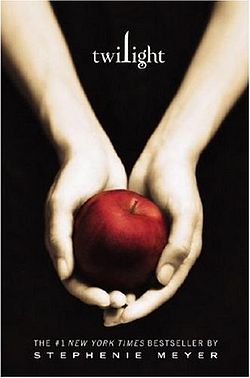
#2 The Twilight Series by Stephenie Meyer
Fantasy fiction- Romantic fiction
Enough had been said and heard about this book. You can look down upon me for all I care, but I am in love with Edward Cullen, as much as I am in love with Bella Swan's character. Stephenie Meyer has constructed a scintillating plot, playing marvelously on an average girl's insecurities and an her dreams of a perfect lover. I have read the whole series twice over, and I will not shy away from burying myself in those familiar pages again when the depression of our 'practical' existence (the practicality even extending to matters of heart) becomes too much to handle.


#3 Wuthering Heights by Emily Bronte
Literary Classic
Need I say anything about this epic love tale which females of all age, around the world have read, and reread and romanticized over and over again? The story of unconsummated passion between Cathy and Heathcliff is a saga in its own self. The narrative of this book is not all flowery, but very dark, almost progressing like a mystery. Perhaps that is why this book was met with censure at first, but over the years has acquired ascendancy among romantic classics. Heathcliff is a character  immortalized in our memory, as that dark and intense hero- capable of passion, and capable of destruction too. Sigh. The wonderful Yorkshire moors. The intense yet unresolved passion. I feel the book is calling me again.


#4 I Too Had A Love Story by Ravinder Singh
Romance
Now, do not judge me for this. I read a lot of new age, commercial Indian literature (if we can call it that), and this book is by far the best I've come across in this genre. Ravin and Khushi, the protagonists of this novel, are the couple next door. The way their love progresses, their sweet murmuring, their first encounters, their brewing passion- everything in this book is painfully relatable. And when you (especially if you are like me) start identifying so much with the incidents and characters in the book, the climax has the potential for leaving you depressed for hours after. I, in fact, found myself wailing. The fact that it is believed to be the author's own story makes the read all the more emotional. Now, the sequel of this story has hit the market. Can Love Happen Twice? I got my copy today. Hell yes I am excited!


#5 Abhijnanashakuntalam by Kalidasa
Sanskrit Classic
Yes, it is an odd inclusion in this list, but for my UPSC preparations, I have gone through most of Sanskrit dramas, prose and poems. 'Erotic' (Shringaar) is the main element of most of the great Sanskrit works, and though I fell in love with a lot of love stories narrated by the likes of Magha, Bana, Bharavi and others, Abhijnanashakuntalam clearly stood out as the most amazing. It is a simple tale of love between King Dushyant and an ashramkanya, Shakuntala. On a hunting expedition, Dushyanta stumbles upon Shakuntala, falls in love, and their love in consummated in a simple Gandharva wedding. Crisis strikes when Dushyanta returns to his Capital City and forgets Shakuntala and their love under the influence of a curse from Rishi Durvasa. Kalidasa weaves a string of some exquisite verses detailing how the two lovers overcome the hurdles created  by Providence's chicanery. Trivia- India, Bharat, is said to have derived its name from Shakuntala and Dushyanta's son- Bharata.

I am all pepped up and reading a lot many books these days. Though I am in a mood for experimenting with different genres at present, I shall return to the trusted romances soon. Just as an concluding thought, I never find a story complete till it does not have an adequate doze of romance in it. A love story, may be as a secondary narrative always does its bit in keeping me hooked onto a novel, no matter which genre it belongs to. Hopefully, I will come up with another list of my favorites, really soon. Till then, keep reading!

The Canyon Of Souls by Ronald Malfi- A Review

on Friday, January 20, 2012

Coincidences in life are can sometimes be amusing, and sometimes a little spooky. It is due to a coincidence that the book 'The Canyon Of Souls' hit off with me instantly. And this coincidence was a spooky one. I had undertaken a literary quest sometime back for understanding the deeper meanings of words like 'Nature', 'Providence', 'Divinity' and 'Man'. Specifically, 'Nature of Man'. More specifically 'Insidious Nature of Man'. In Ronald Malfi's The Canyon of Souls does not lie an understanding of the above mentioned terms-but in it lies a story while builds upon these concepts to skillfully weave together a light thriller, with thrill emanating from both- natural and preternatural sources.

The Canyon Of Souls is what the Tibetan lore accords the status of a beyul. Beyuls are places of mythical significance, the lands between our world and the next, or, between the world of mortals and the world of immortals. Beyuls are believed to be hidden in the womb of Nature, which has a way of preventing man from discovering them. The book narrates an extreme adventure story of a group of seven explorers, who set out in the search of Canyon of Souls, nestled somewhere deep in the belly of the arduous Mountains of the North.

The protagonist of The Canyon of Souls, doubling up as the narrator is Tim Overleigh, a one time famous and dexterous sculptor who abandoned his art after the death of his beloved wife, Hannah, in a fatal car accident. Being chased continuously by her ghost, Tim takes recourse to a number of adrenaline pumping adventure activities. He nearly escapes death while on a spelunking expedition, after which most of his time is spent inside his morbidly dull home. A chance meeting with his long lost acquaintance, Andrew Trumbauer -an enigmatic, adventure junkie- opens in from of Tim an invitation for joining 6 other men on a peregrination through the icy Godesh Ridge in the Himalayas to seek the still unscaled Canyon of Souls. Convinced that this is his one chance to escape the dullness of his surroundings and put his life back on track, Tim and Andrew, and some more explorers set on a journey through not just the unforgiving weather and impossible terrain of Himalayas, but also a journey through Tibetan mysticism, deceit, death and life altering realizations.

The Canyon of Souls, before saying anything else, has one of the most promising plots I have come across in a long time. To add to the glee of a reader uninitiated in the adventure fiction genre, the author Ronald Malfi does a fine job of scripting a tale which becomes towards the middle a compulsive page turner. Quick paced, and laced with vivid imagery, what I like about the book is that it is not an idle read. As much as it makes you gape and tremble with unforeseen twists in the plot, it makes you think too. What begins as an inquiry into the legendary conflict of Man versus Nature metamorphoses into an even darker and enduring conflict of Man versus Man. A little scratching on the fabric of the story reveals the underside of a bevy of thoughts on human psyche- its glory and its darkness, and although this aspect has not been investigated enough in Malfi's narrative, it still feels that these yet incomplete investigations are running like a stream under the very plot of the story.

As it progresses, the storyline transforms from being another of those explorers' diaries to a gory macabre tale which kept me glued to itself. Even though I continued turning pages at a more than decent speed with due intrigue, I still could not help being put off by Malfi's verbosity, unwelcome in places. The author, however, deserves accolades for his brilliant descriptions of Himalayan topography, of the action in the story, and even of the subtle details of Tim's haunting visions. His metaphors and similes are striking and aid the reader's imagination to flow with that of the writer's.

As far as the story line is concerned, it was riveting. I did have an issue with half sketched details of the other characters in the story. The five other explorers with Tim and Andrew included Petras, Curtis, Chad Nando, Hollinger, and Shotsky- and these are people you can picture in your mind only skeletally; knowing not their background, but may be only one defining trait of their personality. In some parts, the book disappoints as it does not reveal few motives for vengeful actions either clearly or convincingly. For curious readers who revel in details, this can be a key low point of a narrative.

As for a definite verdict- the book is nice. For a one time rapid read, it is totally worth its salt. Three stars on five for me it is, for giving me some eye widening moments, and also making me believe in guardian spirits- a dakini- as the author has put it.

(This was reviewed on request from Grey Oak-Westland)

Being Elizabeth by Barbara Bradford Taylor- A Review

on Friday, January 6, 2012

"Just that....Love won't wait. You have to immediately grab hold of it, hang on to it, when it suddenly appears in all its glory. Yes, you really do, because it certainly has a way of disappearing on you. In fact, you could say it's ephemeral. It evaporates...just like that!"
"You and I certainly grabbed it, didn't we?"

The above is a conversation between Elizabeth Turner and Robert Dunley, the romantic couple who star as the protagonist in another of Barbara Taylor Bradford's family sagas, this time about the Deravenel Dynasty. At the outset itself it must be remarked, that Bradford, OBE, the best selling author of A Woman Of Substance, does not quite live upto her reputation in this book. The author claims at the end of the book that her story is inspired from the life of Elizabeth Tudor, one of England's most dynamic monarchs. However, it is a classic case of how sometimes too much inspiration is bad inspiration. A plot summary might be apt before I sum up my views on the book.

Being Elizabeth is the story the eponymous Elizabeth Deravenel Turner, the last in the line of what has been fictionalized as the oldest conglomerate in the world, the Deravenal Dynasty. In a story that spans a decade, from the mid 1990s transitioning into a new millennium, culminating in the year 2006, Being Elizabeth essays the journey of Elizabeth as the Managing Director of the Deravenel's which she inherits at a tender age and in a devastated condition owing the reckless handling of business operations by Elizabeth's now dead half sister, Mary Turner. Together with her trusted comrades, Cecil Williams and Roberth Dunley, and with the aid of her impeccable business acumen, Elizabeth succeeds in putting back Deravenel's on the path to glory. With the latter gent, Elizabeth has a scandalous romantic involvement since he is an already married man. Having had an abusive childhood, yearning for a single hint of love from her father who married six women, Elizabeth develops a phobia of marriage which becomes the most significant obstacle in the stability of her relation with Robert Dunley. Problems in Elizabeth's life are compounded by constant threats to her sovereign business empire and her claim to the Deravenel inheritance as well.

Being Elizabeth is a story told in a monotone, granting no serious jolts or gasps to the reader. Having read Ms. Bradford extensively, I have figured that one of her peculiar characteristics is that she weaves the crisis into the very fabric of the story. So it lurks around always. As a reader, you keep waiting for that one serious eruption which will set the protagonists life haywire, and then the story will pick up pace. Alas, with Being Elizabeth, nothing like that actually happens.

Bradford spends a lot of time giving vivid description of Edwardian art and architecture, which, unless you are an aficionado, can make things a little draggy. Still, you will but marvel at her for creating that theatrical ambiance in your mind, in which you can easily place the characters and imagine their story. She does her research well, and in this case, since her characters come inspired from real life figures, their development in the story is rather admirable. They are steady and lucid and distinctly identifiable.

Although it would help readers if they have read the previous two installments of the Ravenscar Dynasty, this book would still not rev up the intrigue which makes one want to turn pages. It is predictable. Highly so. The descriptions about imminent family coups, takeover bids, business strategies, and much else, are intelligent and informed, but also lethargically long and repetitive.

For me, the high points of the book, besides Bradford's amazing prowess at writing impeccably beautiful and poetic English, are two. First, she, like always, has for the subject of her book a smart, empowered and a woman in control. You would never find her heroines shedding tears or feeling oppressed. Her heroines always rise above their predicaments, and shine bright. Secondly, I love the love angle in the story. As stated earlier, the love story between the protagonists in this book is inspired by the rumoured affair between Queen Elizabeth Tudor and Robert Dudley, her closest aide, and the first Earl Of Leicester. Bradford does a fine job of carving out an intense, passionate and touching love story, though I find the erotic element a little over emphasized in the book, unnecessarily so.

I would give it a little less than 2 stars on 5, and that for a Barbara Taylor Bradford family saga is a little disappointing.
The Author- From her, you instinctively expect more.


The Perfect Bride by Brenda Joyce- A Review

on Tuesday, December 20, 2011

I had no inkling when I bought this book for an unbelievable bargain price of Rs.25 from a shady corner in Janpath flea market that I am going to be in for such a treat. This book, however, surpassing all my expectations took me on a glorious journey of romance and passion, one I am not likely to get over for at least some months to come.

The Perfect Bride is seventh in the sequence of de Warren dynasty books- historical romance penned by the much loved spinner of compelling tales of passion- Brenda Joyce. In the beautiful and flowing language of Joyce, it narrates the love story, of Blanche Harrington and Rex de Warren, a perfect English woman and a damaged war hero. Blanche is a fine, dignified, composed and graceful woman, who ails from a dark past. She has a family fortune to manage, and hence an immediacy to marry and settle down with one of the 228 suitors lined up for her. She, however, has always been smitten by an old family friend, Sir Rex de Warren. On his part Sir Rex is also more than fond of Lady Blanche, but he is the classic de Warren hero- intense, regal, powerful and not easily the emotive one. He, I reiterate, represents the classic hero from English historical romances- he is a recluse, not for once wanting to adhere to or participate in the customs of English polite society. He has a tortured past, a heartache and a lost leg, and he prefers the confines of his estate at all times, abhorring any company except for that of the charming Lady Blanche.

Common friends connive to bring together Blanche and Rex, but the scene of their re-acquaintance is what neither of them could have imagined or wished for. Upon her visit, Blanche finds him in a compromising situation with his maid. He, of course is flushed with awkwardness and embarrassment. But that is where the beauty of their latent love becomes visible. Their fondness for each other is based not on physical attraction or lust, but enormous mutual respect for each other. The forgettable reunion is soon left behind, and a tale of haunting romance is set on course.

However, here is where the flames of Lady Blanche's dark past are reignited. This is the point of 'crisis' in their love story- but this is not the stereotypical impediment you would expect in the way of two lovers who yearn togetherness. 'Sanity', for all you lovers of romance, would not form one of the usual hindrances in the consummation of a love story. Blanche, as we come to know, has been rendered incapable of all emotions following the traumatic death of her mother. She has an unnatural composure; more apt to say that she is simply passionless. Rex de Warren, with his inveigling persona, however, changes that for her. Their growing intimacy leads them to a night of intense passion, following which Blanche's emotions reawaken, and that too with shocking intensity. Her heart, which she deemed was hard as glass, undergoes an admirable thaw under Rex's embrace, but not all for good. Accompanying the new found feeling of love and passion are horrifying memory trips back to the death scene of Blanche's mother. She has episodes of dementia. She shrieks. She's petrified. She discovers that all truth about her mother's death had been concealed from her. She feels she is losing her sanity day by day. And the only way to protect her, she feels is to shut herself from all feelings of love which are beginning to melt her hard acquired equanimity. In a desperate logic acquired from panic, she decides to run away from everything that caused these paroxysms of insanity to ruin her peace- including Rex.

Thus our lovers are torn apart. In the almost velvety narrative, I found myself many a times weeping, many a times frustrated, because more eager than them was I to see Rex and Blanche together. This love story was unique in many ways. The underlying emotion, the desires, the end might remain the same for most mushy romances, but the path this book treads on was definitely not run-of-the-mill. Here we are not talking of love at first sight, or some mundane physical attraction which leads to intensified lust and passion. Here we encounter long sustained, yet dormant feeling of love borne out of remarkable mutual respect between the protagonists. 'Sanity', as I mentioned, as the main conflict in the storyline adds another dimension to the intrigue which compels a reader to keep turning pages. You would, however, want to pause a few times to absorb the beauty of certain heartwarming scenes described unto perfection by the seasoned love ink of Brenda Joyce.

My favorite parts in the book begin after the introduction of the conflict. That is where the narrative acquires pace. And what might touch you most is the point in the book where Rex decides to watch over and take care of Blanche as she battles her terrifying memories, knowing very well that he is the person keeping her away from himself. So, in order to help her, he needs to restrain completely his emotions for her. It is concern, care and selflessness which then helps sustain whatever little love they had experienced in each others embrace.

Sigh. It is a lovely read. A perfect wintry read. Tucked away in your quilt, with moist eyes and a cold red nose, trust me, this is the book you want in your hands even if you're half as much a romantic as I am.

Love, Life & All That Jazz by Ahmed Faiyaz - A Review

on Wednesday, December 14, 2011

"How I wish you could see the potential, the potential of you and me. It's like a book elegantly bound, but in a language you can't read just yet." Lyrics from 'I will possess your heart', Death Cab for Cutie.

For the above quote, and many more, I am thankful to Ahmed Faiyaz, the writer of the book I am attempting to review presently. A book I was contemplating leaving unread after completing some fifteen pages made it's way quite unassumingly to my heart. So much, that my heart felt heavy when it ended. I wished it lasted longer, just to grant me some more of those amazingly real and relatable moments. But even as it ended, it made me believe in the concept of a silver lining, for a moment motivating me to find my own.

Love, Life & All That Jazz (LL&ATJ) is a contemporary tale of love, of dreams, of coming of age. It rotates around six central characters, aided finely by a few more who help shape and pace the story as it moves ahead.
  • Though some readers might differ, but for me, the main story in the narrative of LL&ATZ was that of Sameer and Tania- the couple with whom the story begins and ends. They are in love, but want different things from life- a fact that complicates their co-existence. While Sameer to make it big in life by pursuing and MBA and career in the UK, Tania is a focused interior designer with her own ambitions and plans to put to reality. Their story is about their long distance relationship, the yearning and the frustrations, and about growing up.
  •  Vicky and Naina, a rich and affluent charmer and his sultry, ambitious model girlfriend are the second couple in this book. They make for that killer couple on the page 3 circuit, a culture towards which Naina gravitates because of the demands of her career and Vicky avoids because of the fatigue emanating from constant attention of nosy shutterbugs. The possessiveness and ambitions, the love and temper- all accessorize their exclusive story woven into that of their other four friends.
  •  Tanveer and Tanaz, the third couple, are adorable and my favorite. Tanveer is the typical small town lad lost in a big city, with pressures and demands of his financially unstable family always looming large on his mindscape. He is bright, diligent, but insecure- and what comes as the proverbial ray of hope in his life is a vivacious Tanaz, the daughter of his Parsi landlady. But religious differences and responsibilities on Tanveer as the sole bread winner of his family bring in more than just complications in the beautiful life they both look forward to sharing.
This is broadly the set up of the story. Author Ahmed Faiyaz has done a wonderful job of finely interweaving each individual story into the over all narrative, with a pace that does not allow you to lose focus or interest. I'll be honest. I did not so much like the book after reading the initial twenty pages. It seemed one of those many books written by amateur, wannabe writers, which litter the book stalls with their jazzy covers and cheesy titles. (Oh! And this is not disdain. I am guilty of having read and thoroughly enjoyed many such books. But I kind of had had enough) So while I was contemplating leaving it and moving onto a historical treatise which lay unread beside my pillow, something in the narrative struck a nerve and I carried on. I am so glad I did.

The story begins with about five characters, and to confess, it is initially a little difficult to shift focus between all of them as they develop their distinct identities in the narrative simultaneously. However, as the story progresses, the author does a brilliant job of giving definition,background and a distinct flavor to each character, so much so that recalling any single name to mind after you're done with the book will make you picture clearly his/her character in  your head. What also helps is that all the characters and situations in the book are extremely relatable. With simplicity in his language, the author has managed to churn out some priceless dialogues and heart warming scenes. This is not one of the grandest of books you will read, but with literary opulence staring down and intimidating modest readers like me from all angles, the humble, breezy and comforting narrative of this book is what you might fall in love with.

Even though  I have labelled it a review, I don't think it is one. I will not rate this book. I cannot critique it. The hopeless romantic that I tag myself as forced me to find way too many familiarities (actual and imagined) with this book, and the consequent predilection just asks me to recommend this book to readers like myself. Heartaches, dreams, pressing family situations, uncertain careers- we are actually coming of age. Want to see a mirror, the kind which promises a silver lining at the end? Do grab this book.

Ahmed Faiyaz has decorated his book with exquisite quotations, one at the beginning of each chapter to give you an abstract peek into what lies ahead in the story. I end this post borrowing one from Chapter 10 of Love, Life & All That Jazz...
"The beginning of love is to let those we love be perfectly themselves, and not to twist them to fit our own image. Otherwise we love only the reflection of ourselves we find in them." -  Thoman Merton

Leonid Afremov again. Can I ever thank him enough for adding all these colors to my life?


The Diary Of A Social Butterfly by Moni Mohsin- A Review

on Wednesday, December 7, 2011

Now this was a book which made me nervous of my nocturnal reading habits. Why? Because I had no clue when I would fall off the sofa laughing at insane decibels even as my family rejoiced in hitherto peaceful slumber. Fortunately, nothing ugly did ever happen to hinder my night-time trysts with Butterfly Khan, and for all those guffaws which continued for 3 nights and 2 days, I have only her to thank!

Eminent Pakistani columnist Moni Mohsin takes you for an roller-coaster ride through the world of socialites- whom, by the way, Butterfly calls 'Socialists'. But what to do! Poor Butterfly, caught among her own rigmarole of thoughts, often find herself prone to adorable malapropisms, which literally spice up her journals. So, you could find yourself wide eyed as you see an 'angina attack' transforming by the virtue of Butterfly's innocence into a 'vagina attack'.  Later you would just settle for howls of laughter as the luscious malapropisms transform 'botox' into 'buttocks', or 'Bangkok' into 'Bangcock'. You will meet business 'typhoons', and see Butterfly becoming 'historical' with laughter.


The Diary Of A Social Butterfly is a book devoid of a plot or a storyline. Rather, it is a compilation of articles published fortnightly by the eminent Pakistani author, Moni Mohsin, in The Friday Times. Moni Mohsin has to her credit other works which gathered much acclaim, like Tender Hooks and The End Of Innocence. This particular book, The Diary Of A Social Butterfly, takes the form of journals written by a Punjabi Convent Educated Socialite, who can think of little else, other than attending parties and maintaining her up market status. Butterfly's journals were scribbled during a crucial and sensitive time for Pakistan's internal stability and international relations- between the years 2001 and 2008. However, our central character, Butterfly, couldn't care less even if the world was on fire- what she needed were parties, and social engagements, and perfect attires, and shoes, and hairstyles, and shawls, and accessories, to remain among the creme de la creme  of the Page 3 crowd of Pakistan. Something in her journals reminds you of Sophie Kinsella's Shopoholic series, but Butterfly has that distinct identity which can makes this exaggerated satire on an incorrigible socialite's life totally worth a read! Each of her journal entry begins with two news headlines- one perhaps sourced from the Reuters, the other, from her own life. Whether it is about firing a maid, fighting with her husband, celebrating Eid, or buying a new jora(dress)- Butterfly takes her life very seriously; she, after all, plays the lead role in it. The lesser happenings, like bomb blasts, terrorism, tsunamis and political turmoils the world can itself take care of. These not withstanding, Butterfly will always stay focused and prepare to fly elegantly to the next event in the city.

The characters in Butterfly's life as as colorful as her own self. She has a Oxford alumnus (an 'Oxen' as she calls him) for her husband, who is smart and learned and everything that Butterfly is not. Fondly called Janoo, her husband is routinely abused in Butterfly's diary as 'crack', 'sarrhial', 'donkey', 'dog', 'zinda laash, 'boodhi rooh', et al, especially for holding strong and empathic political views and social concerns. Butterfly has a 13 year old son, named Kulchoo, and even at that tender age, Butterfly can't help but be far sighted and prepare for his wedding each time she is inspired by a novel idea or some innovative decor technique in one of the many weddings she attends. She has a mother-in-law, addressed as the Old Bag, and two sisters-in-law, called as the Twosome Gruesome- the perpetual sources of misery in her otherwise blissful life of glamor and glitz and parties and more parties. Other delightful characters in Butterfly's colorful life include her Mummy, her Aunty Pussy (whose husband has a curious epithet as 'Uncle Cock-up') with her unlucky-in-marriage son Jonkers, her friends- Mulloo, Flopsy, Furry among others.

My ecstatic bit of writing so far would have made it obvious that I LOVED the book. It has humor bordering on insanity- you can ridicule Butterfly for all her ignorance and self obsession, but you can't help loving her for all the light moments she grants you. And, if Khushwant Singh endorses on the cover that this book is 'hilarious', the book has to be just that- hilarious! Huge thumbs-up to the crafty malapropisms- some of the absolutely refuse to leave my head. And the local slangs, aah, they are what make Butterfly's ridiculous English all the more gorgeous.


All in all, Butterfly makes for a highly recommended read. The only caveat I would like to put in place, sourced from a fellow blogger's critique of the same book,  is that dumbness as the source of humor, begins to tire out readers towards the end of the book. It is one thing to read this content in the form of fortnightly commentaries with contemporary happenings to relate with, and quite another to read it as a book of chronologically arranged articles lacking any storyline to adhere to. Still, I would regard this book as one of the best I read in the year 2011.

Generously enough, its 3 stars on 5 for me. For all that laughter. :)

Moni Mohsin- the author

Unlikely Hero: Om Puri- A Review

on Thursday, December 1, 2011

The book cover- quite inviting
When the subject of a piece of writing is as rich and extraordinary as the much hailed actor Om Puri, a reader's expectations from it shoot right through the sky. Not only the reader, but the writer too should feel blessed for getting a chance to take an intimate peek into his life, and winning an opportunity for leaving  a permanent mark in the literature of Indian Cinema.

Alas! This biography does nothing to enthrall the reader, or increase the esteem of the biographer, or of the subject of the biography itself. Om Puri has been one of the most admired Indian actors now since an era. His acting skills boast of an almost preternatural glow, which accord to him an immutable hallowed status in the history of not just Indian, but world cinema. He has been one of my firm personal favorites. I had, for long, been watching his movies without any specific admiration for this glorious character actor he is, but it was a chance viewing of Govind Nihalani's Droh Kaal which left me completely enamoured of both, Om Puri, and his equally talented co-star, Mita Vashisht. There after, his cameo in Gandhi, his riveting performance in East Is East and My Son The Fanatic, his brilliant cop-act in Ardh Satya and his powerful baritone- all drew me towards discovering with awe one of the finest and most consistent of character actors ever.

Naturally, I was expecting a lot from this book. Visually, it fulfilled all my expectation. Interspersed in to the biography are a large number of photos, both from Om's personal and cinematic life. Though not placed in any logical order, they still aid the reader to help translate perspectives into lucid images in his mind. As far as the story of Om told in the book is concerned, it tells you that he was a child born and brought up in extremely adverse and perverse environments. He was the last born, and one of the very few surviving children of his parents. He grew up earning his own bread from a very early age, and diligence and sobriety were permanent traits of his character, especially as far as his devotion to his art is concerned. He studied at NSD, and subsequently at IIFT- Pune, in the august company of some of India's best known parallel cinema actor and directors like Rohini Hattangadi, Naseeruddin Shah, Saeed Mirza, et al. His looks did not fit the the conventional criterion for an 'actor, villain or a comedian', thus he had to work extra hard to prove his mettle, and establish himself as an extremely bankable character actor. Today, he is well recognized face in India and abroad. In fact, the finesse he brings in each act of his got him more fame abroad, specifically in the UK, than in India. This is ironical given the fact that Om could barely speak Englisjh as a student and carried a heavy Punjabi accent when he could. He is settled at present in Bombay with his wife Nandita and son Ishaan.
With Smita Patil-the queen of art cinema, in Sadgati. His portrayal of an untouchable , Dukhi, won his instant acclaim from film aficionados far and wide.

I am late in mentioning it, but Nandita C. Puri, his wife, is the author of this book. Unlikely Hero- the title was coined by Shyam Benegal, and Nandita was the one trusted with telling Om's story to the world. I must've forgotten mentioning her, because she does an extremely disappointing job of giving words to Om's tale. The tone of the biography is patronizing, to say the least. While I wanted to read a biography, I ended up reading a critique of Om's life, which spent more time delineating on the amorous escapades of a young Om (highly interesting, if I may confess) rather than providing perspectives on Om's nuanced growth as an actor and expounding on his relationship with his art, and fellow artists. Professional relationships I mean.

Om Puri as a rickshaw puller in the City of Joy.
Nandita is 16 years younger to Om, whom she met as a reporter in Calcutta. Their love took flight there and then, as Om battled a crumbling marriage back home with Seema Kapoor. She might have been a good reporter, and this I say because even the honeymoon phase of their relationship she has 'reported', with a glaring lack of any emotional appeal to it. What she does well in the book, the only salable  attribute perhaps, is the job of peppering the narrative with inconsequential minutiae which titillate the gossip friendly nerves in the reader's system and help him keep turning pages. Two pages in the book are penned by Om's son Ishaan- but like the rest of the book, they too are disappointing, for they talk not of much else but Om's addiction to smoke.

Saving grace- the sections in the book penned down by Om himself. He reflects, albeit concisely, on each of his film projects; something which as an Om Puri fan you look forward to. Also, tidbits of a lecture he gave at Whistling Woods make for a worthwhile read. The prologue by late Patrick Swayze is perhaps the highest point in the whole biography; its appropriate placement at least helps a reader to start on a good note.

Concluding gossip- Om Puri's married life, ever since the release of this biography has been on the rocks. It has been reported, rather recently, that Om wants to divorce Nandita and return to his ex-wife, Seema Kapoor. Speculations are rife that the sleazy revelations of Om's life, which include his 'curious caressing of his maternal aunt's exposed tummy', his teenage 'deflowering' at the hands of an old 'toothless' maid, inter alia , made by Nandita in the Unlikely Hero are the cause behind Om's decision. For me, more important than this gossip is the hope that Om gets another biography to his name, which does justice to his persona as it is remembered on the pages of cinematic history.

Ishaan, Nandita and Om at the book launch. The happy family in the picture is not going through tough phase, and this very biography is rumoured to be the cause.

The Winner Stands Alone by Paulo Coelho- An Attempted Review

on Thursday, November 24, 2011

"He has no idea what he is doing. He is walking towards Absolute Limitless Evil, capable of anything.Hamid assumes that Igor is just another adult and that he can confront him either with physical force or with logical argument. What he doesn't know is that Absolute Evil has the heart of a child and takes no responsibility for his actions and is convinced that it's right. And when it doesn't get what it wants, its not afraid of using all possible means to satisfy its desires". - The Winner Stands Alone, Paulo Coelho.

For me, the word macabre and love can never go together. But when it comes to Paulo Coelho's writings, you can obviously expect the unexpected. Before I picked up The Winner Stands Alone (TWSA), my experience with Coelho was moderately sweet. I had read three of his works- The Alchemist, Eleven Minutes and Veronica Decides To Die- and each one them, which I read separated by huge spaces in time, enthralled me at some level. So, while I could not exactly call myself and ardent fan of the author, I was definitely one who trusted him for writing good, out-of-the-box stuff.

Things changed a little with TWSA. It is his twelfth book, and like the earlier ones, touches on a something arcanely sublime, which is way above an ordinary person's realm of imagination and understanding. This, exactly, is what Coelho is famous for doing. TWSA pivots around one protagonist, although in totality, there are five names which shape and aid the development, pace and culmination of this book. 

Igor Malev, is not just the protagonist, but the very subject of this book. He is an extremely successful Russian telecom giant, who visits Cannes Film Festival with a single thing on his mind- to win back his wife Ewa. Ewa, who was once the motivation and the very reason for his existence is now married to a couturier, Hamid Hussein- a man as successful as Igor, but a powerful contradiction in character to him. Igor never recovers from the loss of his wife, and after two years of separation, decides to win her back. He calls himself to be on a 'mission of love', a mission that requires sacrifices- murders. Set against the backdrop of glitz and glamour of the world's most famous film festival, what then ensues is a tale of 'extraordinary violence' (as the book cover puts it), lasting just under 24 hours, revealing the evil which hides in each human soul and busting the myths associated with the world of celebrities.

TWSA is one of Coelho's most criticized books, as I learnt later. The reason for that, as I can guess, are many. For me, however, the prime reason for finding it an unsatisfactory read, was the profound sense of darkness which as an engrossed reader, TWSA filled me up with. The portrayal of the world of glamour, no doubt realistic, is very depressing. It is depicted as an arena in which under the glimmer of stars, what exists is deep darkness, an abyss of depression from which no return is possible. Gabriela, an aspiring and aging actress, and Jasmine, a young and wise model are the characters who are used to convey this aspect of the story, though in a very repetitive fashion. The narrative of the story keeps shifting between all the five characters (and also a few more), and which though essential to the fabric of the story, hinders the lucidity of the storyline at places. The development of the characters, besides that of Igor and perhaps Hamid Hussein, leaves a lot to be desired. The worst bit for me was the contemplative end of the novel. I like stories which end in light, and even though TWSA does not end in total darkness, it gives me nothing positive to carry in my heart.

What I would keep due credit to Coelho for, though, is his hero- Igor Malev. Yes, he is a character I hated, but that is what this character was intended for- to be unabashedly hated by some and to be justified by others. Both categories of people were not expected to like this character, even if they empathized with him at some points. He was a mirror for all the evil thoughts we allow and justify within ourselves. Igor displays what is known as the Lucifer Effect, a kind of psychological condition, in which an otherwise normal individual develops a mindset where he crosses the dividing line between good and evil, and engages in evil action thoroughly justified in his brain. A good revelation of the psyche of the serial killers can be provided by reading this book; though a tale of love I still refuse to believe this book is. Igor's appentence for Ewa is understandable, but his ways and means and thoughts and actions are capable of powerfully unnerving the young believers in love like me.

Reading 'The Winner Stands Alone' on my way to Jaipur.
I've had long, passionate discussions on this novel with three of my friends; Coelho does stimulate your brain that much for sure. So I might go on presenting my opinion of this book in a tiring, dilatory tone. However, succinctly put, it is not a book for all types of readers. Even for Paulo Coelho admirers, may be this is one book you can skip.Love might not have been the central theme of this book, but it is depicted as the underlying motivation for all things evil. I would give it only about 2 stars on five, and maintain, that for me, macabre and love can never go together.