
I was asked a few days back by someone to recommend romantic novels which make for a heart warming read. I don't know what all names I blurted out under the assumed pressure of answering quick, but the question stuck by in my head for a decently long time there after. When I answered it for myself, I spotted five romantic books distinctly embedded in my memory which by far have been the best I have stumbled upon. Since romance as a literary genre encompasses a lot, I will specify that what I am about to share with my readers today are 5 of the best 'Love Stories' I have read, which I strongly recommend to you all as well. An important caveat, before I share my favorites, is that my reading habits are not the best around. I mean, I read a lot, but according to some literature aficionados, I read crap. Anyway, I often fall in love with even what is otherwise condemned as crap. So, not sticking to any stereotypes, from a wide variety of sub-genres- here are 5 love stories which conversed straight with my heart and whose essence flowed out through tears in my eyes.
 I found this book in a dusty, dingy corner of my college library. Picking it up on instinct, I could never even have imagined what an emotional rigmarole this book had planned to offer me. Set up during the earlier years of British Raj in India, this story, if I remember correctly, is the tale of two lovers haunted by a long history of family rivalries. Olivia, an American tourist in India and Jai Raventhorne, a local born of an Anglo-Indian union have nothing in common save an inherited animosity. However, they find themselves irresistibly drawn to each other and soon their attraction metamorphoses into passion. This passion is not only evident in their love, but also in their actions of vengeance on each other. To see the plot unravel, fluctuating between love, passion, animosity and revenge is a thrilling experience. Someone from you please remind me to read this book again :)
 #2 The Twilight Series by Stephenie Meyer
Fantasy fiction- Romantic fiction
Enough had been said and heard about this book. You can look down upon me for all I care, but I am in love with Edward Cullen, as much as I am in love with Bella Swan's character. Stephenie Meyer has constructed a scintillating plot, playing marvelously on an average girl's insecurities and an her dreams of a perfect lover. I have read the whole series twice over, and I will not shy away from burying myself in those familiar pages again when the depression of our 'practical' existence (the practicality even extending to matters of heart) becomes too much to handle.
#3 Wuthering Heights by Emily Bronte
 Literary Classic
Need I say anything about this epic love tale which females of all age, around the world have read, and reread and romanticized over and over again? The story of unconsummated passion between Cathy and Heathcliff is a saga in its own self. The narrative of this book is not all flowery, but very dark, almost progressing like a mystery. Perhaps that is why this book was met with censure at first, but over the years has acquired ascendancy among romantic classics. Heathcliff is a character immortalized in our memory, as that dark and intense hero- capable of passion, and capable of destruction too. Sigh. The wonderful Yorkshire moors. The intense yet unresolved passion. I feel the book is calling me again.
#4 I Too Had A Love Story by Ravinder Singh
Romance
 Now, do not judge me for this. I read a lot of new age, commercial Indian literature (if we can call it that), and this book is by far the best I've come across in this genre. Ravin and Khushi, the protagonists of this novel, are the couple next door. The way their love progresses, their sweet murmuring, their first encounters, their brewing passion- everything in this book is painfully relatable. And when you (especially if you are like me) start identifying so much with the incidents and characters in the book, the climax has the potential for leaving you depressed for hours after. I, in fact, found myself wailing. The fact that it is believed to be the author's own story makes the read all the more emotional. Now, the sequel of this story has hit the market. Can Love Happen Twice? I got my copy today. Hell yes I am excited!
 Sanskrit Classic
Yes, it is an odd inclusion in this list, but for my UPSC preparations, I have gone through most of Sanskrit dramas, prose and poems. 'Erotic' (Shringaar) is the main element of most of the great Sanskrit works, and though I fell in love with a lot of love stories narrated by the likes of Magha, Bana, Bharavi and others, Abhijnanashakuntalam clearly stood out as the most amazing. It is a simple tale of love between King Dushyant and an ashramkanya, Shakuntala. On a hunting expedition, Dushyanta stumbles upon Shakuntala, falls in love, and their love in consummated in a simple Gandharva wedding. Crisis strikes when Dushyanta returns to his Capital City and forgets Shakuntala and their love under the influence of a curse from Rishi Durvasa. Kalidasa weaves a string of some exquisite verses detailing how the two lovers overcome the hurdles created by Providence's chicanery. Trivia- India, Bharat, is said to have derived its name from Shakuntala and Dushyanta's son- Bharata.
I am all pepped up and reading a lot many books these days. Though I am in a mood for experimenting with different genres at present, I shall return to the trusted romances soon. Just as an concluding thought, I never find a story complete till it does not have an adequate doze of romance in it. A love story, may be as a secondary narrative always does its bit in keeping me hooked onto a novel, no matter which genre it belongs to. Hopefully, I will come up with another list of my favorites, really soon. Till then, keep reading!
#1 Olivia and Jai by Rebecca Ryman
Historical Fiction, I guess.
 I found this book in a dusty, dingy corner of my college library. Picking it up on instinct, I could never even have imagined what an emotional rigmarole this book had planned to offer me. Set up during the earlier years of British Raj in India, this story, if I remember correctly, is the tale of two lovers haunted by a long history of family rivalries. Olivia, an American tourist in India and Jai Raventhorne, a local born of an Anglo-Indian union have nothing in common save an inherited animosity. However, they find themselves irresistibly drawn to each other and soon their attraction metamorphoses into passion. This passion is not only evident in their love, but also in their actions of vengeance on each other. To see the plot unravel, fluctuating between love, passion, animosity and revenge is a thrilling experience. Someone from you please remind me to read this book again :)
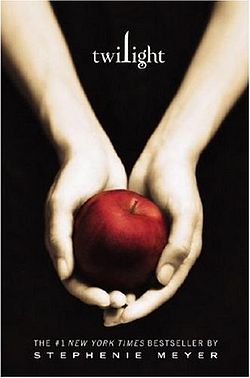 #2 The Twilight Series by Stephenie Meyer
Fantasy fiction- Romantic fiction
Enough had been said and heard about this book. You can look down upon me for all I care, but I am in love with Edward Cullen, as much as I am in love with Bella Swan's character. Stephenie Meyer has constructed a scintillating plot, playing marvelously on an average girl's insecurities and an her dreams of a perfect lover. I have read the whole series twice over, and I will not shy away from burying myself in those familiar pages again when the depression of our 'practical' existence (the practicality even extending to matters of heart) becomes too much to handle.
#3 Wuthering Heights by Emily Bronte

Need I say anything about this epic love tale which females of all age, around the world have read, and reread and romanticized over and over again? The story of unconsummated passion between Cathy and Heathcliff is a saga in its own self. The narrative of this book is not all flowery, but very dark, almost progressing like a mystery. Perhaps that is why this book was met with censure at first, but over the years has acquired ascendancy among romantic classics. Heathcliff is a character immortalized in our memory, as that dark and intense hero- capable of passion, and capable of destruction too. Sigh. The wonderful Yorkshire moors. The intense yet unresolved passion. I feel the book is calling me again.
#4 I Too Had A Love Story by Ravinder Singh
Romance

#5 Abhijnanashakuntalam by Kalidasa

Yes, it is an odd inclusion in this list, but for my UPSC preparations, I have gone through most of Sanskrit dramas, prose and poems. 'Erotic' (Shringaar) is the main element of most of the great Sanskrit works, and though I fell in love with a lot of love stories narrated by the likes of Magha, Bana, Bharavi and others, Abhijnanashakuntalam clearly stood out as the most amazing. It is a simple tale of love between King Dushyant and an ashramkanya, Shakuntala. On a hunting expedition, Dushyanta stumbles upon Shakuntala, falls in love, and their love in consummated in a simple Gandharva wedding. Crisis strikes when Dushyanta returns to his Capital City and forgets Shakuntala and their love under the influence of a curse from Rishi Durvasa. Kalidasa weaves a string of some exquisite verses detailing how the two lovers overcome the hurdles created by Providence's chicanery. Trivia- India, Bharat, is said to have derived its name from Shakuntala and Dushyanta's son- Bharata.
I am all pepped up and reading a lot many books these days. Though I am in a mood for experimenting with different genres at present, I shall return to the trusted romances soon. Just as an concluding thought, I never find a story complete till it does not have an adequate doze of romance in it. A love story, may be as a secondary narrative always does its bit in keeping me hooked onto a novel, no matter which genre it belongs to. Hopefully, I will come up with another list of my favorites, really soon. Till then, keep reading!


